
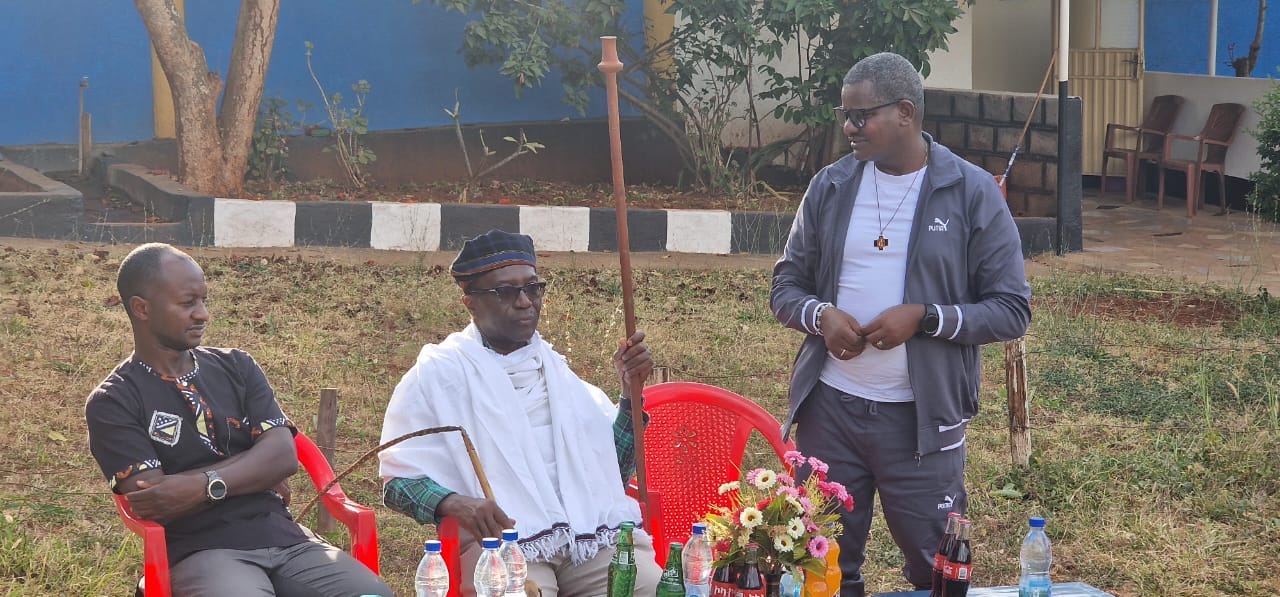
“It is a blessing and a pleasure to be back in this country and to witness the remarkable development of both the nation and the Spiritan Group.” These were the words of Fr. Prof. Peter Osuji, C.S.Sp., during his visit to the Catholic Spiritan missions in Ethiopia after an absence of 27 years.
Fr. Osuji is a Spiritan priest from the Nigerian South East Province. He currently serves in the United States as a professor of Bioethics at Duquesne University in Pennsylvania. His return to Ethiopia (16 July to early August 2026) brought back nostalgic memories of the country where he spent the early years of his missionary life.
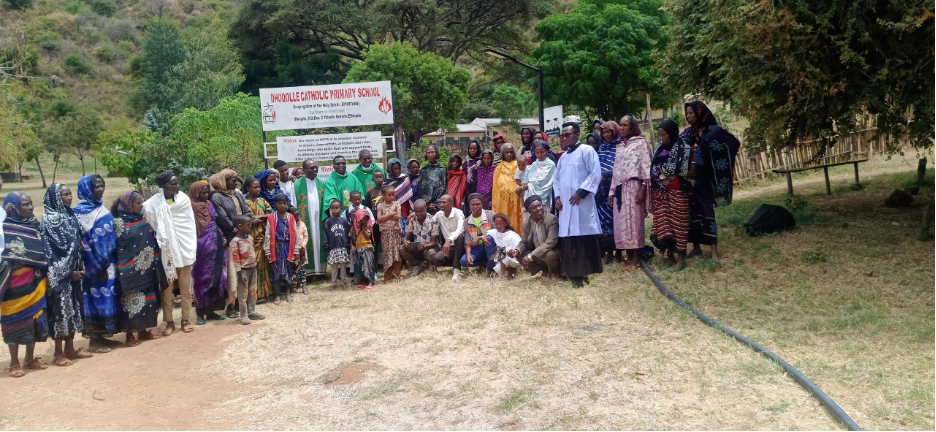
Fr. Osuji was the first African Spiritan priest to be appointed to the Ethiopian mission. Arriving in the 1990s, he served in Dhadim Parish in the Borana region for nine years. During his missionary service, he worked as the parish priest, Director of Dhadim Primary School, and actively participated in community development programmes, particularly in conscientisation and other human development initiatives.
Leaving for a sabbatical year in the United States in 1999, he pursued further studies and specialised in Bioethics. Reflecting on his decision to come to Ethiopia, he explained that he had always desired to serve in an international Spiritan community, and Ethiopia apparently offered that opportunity.
His return after nearly three decades awakened many cherished memories. “The people are different, interesting, and full of surprises,” he recalled. “What I appreciated most about Ethiopia was the sense of safety. I could travel anywhere without fear.”
He presented his ministry in Ethiopia as both enriching and challenging. Working among the Ethiopian people, whose identity and heritage had been preserved free from much external influence, made him rethink many of his assumptions about missionary work. Additionally, having been raised in the tradition of the Western Rite of the Catholic Church, he arrived to find the Ethiopian Catholic Rite. Being one of only two African countries that was never formally colonised, Ethiopia provided a unique missionary context. As a consequence, evangelisation had to begin with a genuine appreciation of the local culture before gradually moving towards contextualised proclamation of the Gospel. He emphasised understanding the people’s traditions first before interpreting the Scriptures in dialogue with their culture. He noted that this was essential in the whole process of spreading the good news.
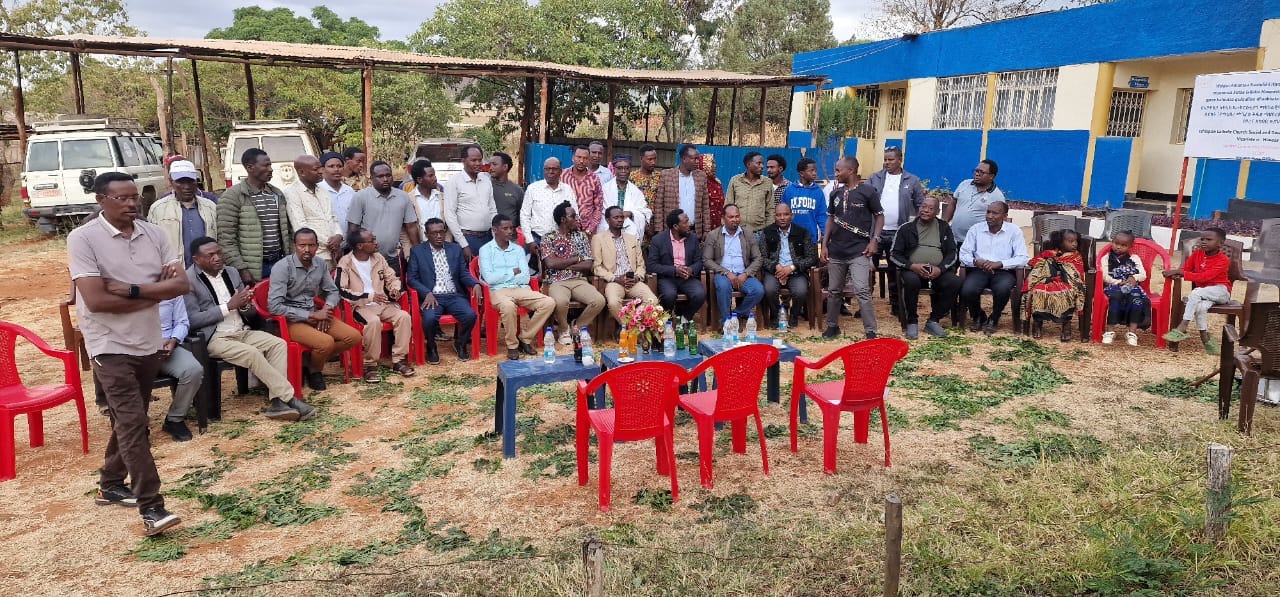
Addressing the Spiritan missionaries currently serving in Ethiopia, Fr. Osuji exhorted the confreres to observe and have a willingness to learn always in patience. “Take time observing, asking questions, and get to know the people,” he advised. Meeting such welcoming and unique communities was a great joy to him. He encouraged the missionaries to persevere in their apostolic work for the good of the church and the souls. He also expressed happiness that the Spiritan Group Ethiopia has now produced indigenous Spiritan religious who are faithfully serving both within Ethiopia and abroad.
During his visit, Fr. Osuji toured several Spiritan ministries and expressed admiration for the remarkable growth of the mission. He commended the work being carried out in parish ministry, education, and chaplaincy apostolates.
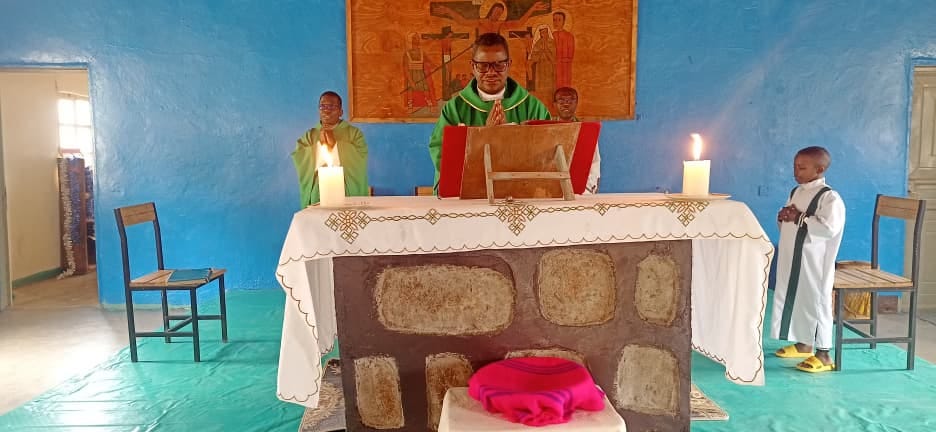
While concelebrating Holy Mass at Good Shepherd Catholic Church, Dhoqolle Parish, he was delighted by the significant growth in the number of Christians. Welcoming him, together with the Spiritan Group of Ethiopia Superior, Fr. Kilimpe Garbicha, C.S.Sp., the Parish Priest, Fr. John Luwani, C.S.Sp., thanked them for visiting the mission.
“We, as young religious serving in Ethiopia, are greatly encouraged by your visit despite the many challenges we encounter in the mission. Your presence inspires us as we continue participating in Christ’s mission entrusted to us by the Church,” said Fr. Luwani.
In his remarks, the Spiritan Group Ethiopia Superior, Fr. Kilimpe Garbicha, C.S.Sp., thanked Fr. Osuji for returning to witness the fruits of the seeds he had sown decades ago. “His presence is a great motivation to the missionaries working here,” he said. Fr. Kilimpe encouraged the confreres to continue living the Spiritan mission with love and dedication. “It is because of his love for the people that Fr. Osuji chose to return,” he remarked. He couldn’t hide his amazement at Fr. Osuji’s ability to speak and understand the Borana language with such fluency after being away from Ethiopia for 27 years. “This is a sign of deep love and embrace for the people and their culture. Growing where you have been planted,” he said. He therefore encouraged the confreres to embrace such efforts and feel part of the communities they serve.
He also acknowledged Fr. Osuji’s contribution to the development of Dhadim Primary School, including its expansion from Grade Six to Grade Eight. During the visit, Fr. Osuji had the opportunity to meet some of the former students whom he had taught, mentored, and empowered through both academic and co-curricular activities.

“He showed us what mission truly means—from darkness to light,” Fr. Kilimpe said. He encouraged former missionaries to return whenever possible to witness the fruits of their missionary service and to encourage those currently serving in Ethiopia.
Speaking to Dhoqolle Catholic parishioners, Fr. Kilimpe asked them to sow seeds of love and kindness within their families and communities. He reminded them to always attend and participate in the Eucharistic celebration on Sundays and draw blessings in the process. He urged the Christians to appreciate their cultural heritage while giving priority to the celebration of the Holy Eucharist. This was in reference to the Borana traditional Jila—a sacred ritual, major cultural ceremony, or festive celebration naming ceremony that often attracts many families. During this season, churches experience reduced attendance. He highlighted the Eucharist’s centrality in the lives of Christians, especially the Catholic faithful.

Therefore, Fr. Osuji’s visit was more than a personal homecoming. It became a moment of renewing missionary zeal for the Spiritan Missionaries and the Christian communities they serve. It involved encouragement and gratitude in the life of the mission. His witness stands as a living reminder to confreres that the seeds sown through faithful missionary service continue to bear fruit long after one has left his mission. As Venerable Francis Libermann, co-founder of the Spiritan Congregation, encouraged his missionaries, they too are called to remain “like a feather, light and free, ready to be carried wherever the Spirit of the Lord wills.”